Bedding Guide
Choosing Organic Wool Bedding: A Guide to Warmth, Weight, and Care
The best wool comforter isn’t necessarily the thickest or the most expensive. It’s the one that suits your sleep temperature, your room, and the kind of care you’re realistically willing to give it. Here’s how to compare organic wool bedding with confidence—from fill weight and shell fabric to certifications and everyday upkeep.
Wool bedding has a quietly appealing combination of qualities: a soft, reassuring layer of warmth, a natural feel, and the potential to work comfortably across more than one season. But “wool comforter” is not a single, standardized experience. One option may be light and airy, another noticeably substantial; one may require careful spot cleaning, while another is designed for a gentle machine wash.
That variety is good news when you know what to look for. Instead of choosing by a product name or a broad promise such as “all-season,” compare the details that shape how a comforter feels in real life: fill weight, fiber blend, shell, stitching, dimensions, and care instructions. Certifications matter, too, but they should be read as specific claims about particular materials or production standards—not as a substitute for understanding the construction.
This guide focuses on the practical decisions behind organic wool bedding. Whether you sleep warm, want a more substantial cover for winter, or simply prefer the feel of natural fibers, a little close reading can help you choose a layer that fits both your bed and your habits.
Start with your own version of “warm”
Warmth is personal. A comforter that feels wonderfully cozy to one sleeper may feel too heavy or insulating to someone who runs warm at night. Bedroom temperature, pajamas, mattress materials, partner preferences, and even the number of blankets already on the bed all influence how a comforter feels. Before comparing products, think about the nights when your current bedding is least comfortable.
- If you often wake feeling too warm: Look for a lighter fill, a breathable shell, and a construction that is not overly bulky. Lightweight wool comforters are often intended for warm sleepers, warmer climates, or use during milder seasons.
- If you tend to feel chilly: A higher fill weight or a more substantial comforter may feel more enveloping. A denser layer can be useful in a cool bedroom, though warmth also depends on your sheets, room temperature, and other bedding.
- If your needs change through the year: Consider a versatile midweight comforter or a design that can be adjusted or layered. A lighter comforter paired with a blanket can offer more flexibility than one very heavy layer.
- If two people sleep differently: A shared comforter can be a compromise. Layering separate blankets on each side, or choosing a flexible system, may be more comfortable than trying to find one warmth level that perfectly suits both sleepers.
Words such as light, medium, and winter weight can help with an initial comparison, but they are not universal measurements. Whenever possible, look for a stated fill weight—often listed per square yard or in grams per square meter—and compare it with the product’s intended use. Even then, fill weight is only one clue: the type of wool, the shell, the quilting, and the overall size influence the finished feel.
What fill weight can—and cannot—tell you
Fill weight describes how much insulating material is used in a comforter, not its complete warmth rating. A higher number may suggest a fuller or heavier layer, but it does not provide a perfect apples-to-apples comparison between different brands or designs. Comforter dimensions matter: the same total amount of wool spread over a larger surface can feel different from that amount in a smaller piece. Construction and fiber density matter as well.
For example, a lightweight wool comforter might list a fill quantity around 150 grams per square meter, while another design may describe its fill in ounces per square yard. The figures should not be compared casually without checking the units, dimensions, and product specifications. If the manufacturer provides only a broad label, such as “lightweight,” use that description alongside information about climate, intended season, and care.
Think of the number as a helpful piece of context rather than a final verdict. The most useful question is not simply “How much fill is there?” but “What kind of sleep environment is this construction meant to suit?” A warm sleeper in a heated apartment may prefer a lighter layer than someone in a cool room, even if both are shopping for year-round bedding.
Wool, blends, and the feel of the fill
Wool is valued in bedding for its insulating and moisture-managing characteristics. Individual fibers can help create a comfortable layer without requiring the dense, compressed feel some sleepers dislike. Wool is also resilient, but the feel of a comforter depends on more than the word wool on a label. Fiber source, processing, fill preparation, and quilting all play a role.
Some comforters use wool alone; others combine wool with a secondary fiber. A blend may be designed to influence loft, resilience, washability, or the way the fill behaves over time. For instance, the Washable Wool Filled Comforter lists a fill of 85% NATIVA wool from Uruguay and 15% plant-based batting. Its maker describes it as machine washable, with a gentle cold cycle and low-heat tumble drying. That care profile is distinct from wool comforters that recommend airing, spot cleaning, or avoiding routine washing.
Blends are not automatically better or worse than single-fiber fills. They simply make it important to read the full composition and care label. If you are seeking wool bedding for a particular reason—such as a preference for a natural fiber, a lighter feel, or a specific certification—confirm that the wording applies to the fill you are evaluating, not just one part of the finished product.
The shell is more than a finishing detail
The shell is the fabric surrounding the filling. It affects the first touch, the way the comforter drapes, and how the filling is contained. Organic cotton is a common choice for wool bedding because it offers a familiar, fabric-soft surface. Cotton sateen often has a smoother hand and a subtle sheen, while percale generally feels crisper and more matte. Those names refer to different weave structures, not to a measure of wool quality.
Thread count may appear on a product page, but it should not be your only guide. A higher figure does not automatically mean a comforter is more breathable, durable, or comfortable. Fiber quality, yarn, weave, finishing, and construction all contribute. If you are sensitive to the feel of fabric, look for a clear description of the shell and, where possible, try the material in person or check a retailer’s sampling options.
Pay attention to practical finishing details, too. Corner ties or loops can attach the comforter to a duvet cover, reducing movement inside the cover. They do not change the comforter’s warmth, but they can make bed-making less fussy. If you use a duvet cover, check that its size and attachment points work with the comforter you are considering.
Quilting keeps the bedding working as intended
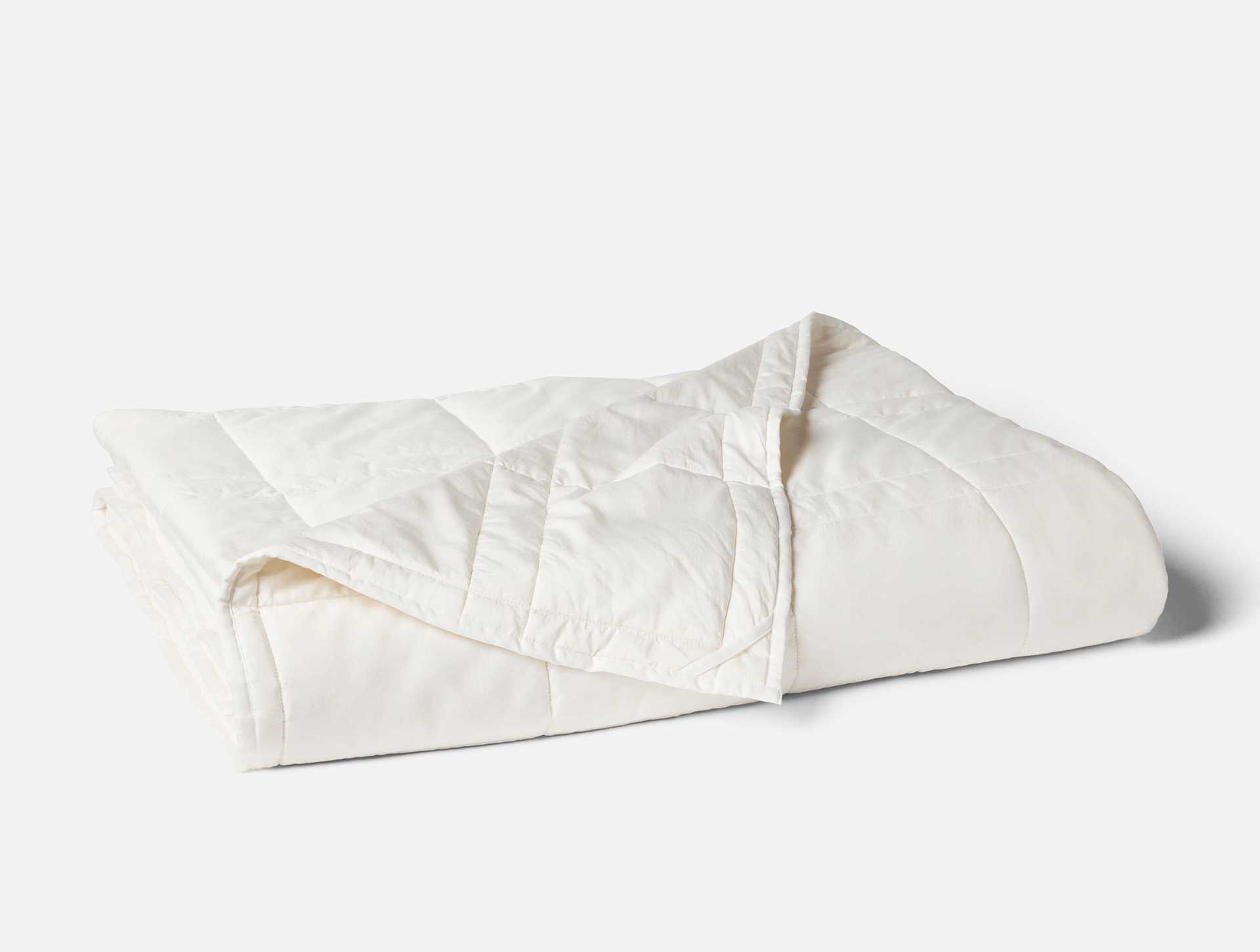
A comforter’s stitching is functional as well as decorative. Quilting, tufting, or other securing methods help keep the fill distributed across the bed. Without adequate anchoring, filling may shift over time, leaving some areas flatter and others fuller. The specific construction varies: diamond or box quilting creates visible stitched compartments, while hand-tufting or perimeter stitching can secure fill in other ways.
Look for a description of how the fill is held in place and whether the design is intended to work as a standalone comforter or as a duvet insert. Corner loops are useful if you plan to use a cover, while a finished outer shell can make a comforter suitable for use on its own. Neither approach is inherently superior; the right choice depends on your routine and preferred bedroom look.
Construction also affects how the piece responds to cleaning. A comforter that can be machine washed may need a sufficiently large washer and careful drying to avoid leaving damp sections. Another design may be better protected by a duvet cover and refreshed through airing. The label should guide the routine; assumptions based on another wool comforter can lead to damage.
Understanding organic claims and GOTS certification
“Organic” can refer to a particular fiber or stage of production, so check exactly what a product claims. A comforter might describe its wool as organic, its cotton shell as organic, or both. Those are different details. If certification is important to you, verify which component is certified and whether the claim is supported by a named standard.
GOTS, or the Global Organic Textile Standard, is a textile certification with requirements that apply across relevant parts of the supply chain. A product description may state that wool, cotton, or the finished textile is GOTS-certified. Read the wording carefully: a certified shell does not necessarily mean every component of the comforter is certified, and a general reference to “organic materials” is not the same as a specific certification claim.
Certification can make comparison clearer, but it is not a guarantee that an item will suit your body temperature, meet every personal preference, or require no maintenance. Pair certification details with information about fill composition, manufacturing, care, and any additional standards listed by the maker. When the description is unclear, asking the seller which components are certified is a reasonable step before purchasing.
Care: follow the label, not a blanket rule
Wool bedding care varies significantly. Some comforters should not be washed, while others are specifically designed for machine washing. A recommendation for one construction should never be assumed to apply to another. Before purchase, read the care instructions and decide whether that routine fits your household.
Everyday protection
A removable duvet cover is a simple way to reduce direct contact with skin, dust, and spills. Because the cover can be laundered more frequently than the comforter, it may help reduce the need for cleaning the filled layer itself. Check that the cover and comforter are compatible in size, and use their ties or loops if provided.
Airing and spot cleaning
For comforters whose care guide recommends airing, let the bedding breathe in a clean, dry place. Follow any directions about sun exposure: manufacturers may offer different guidance, and prolonged direct sun can affect some textiles. For a small mark, spot clean only if the care instructions allow it, using the method and cleaning products specified. Avoid soaking the fill unless the manufacturer says that is appropriate.
Machine washing and drying
If the comforter is labeled machine washable, follow the stated temperature, cycle, detergent, and drying instructions closely. A large comforter may not move freely in a small household machine, so check the capacity required. Drying deserves special attention: the center should be fully dry before the comforter is stored or put back on the bed. If the label recommends professional cleaning, do not replace that advice with a home-washing experiment.
For a wool product that is not machine washable, a washable duvet cover and occasional airing may be more important than frequent cleaning. If a major spill occurs, consult the manufacturer or a qualified cleaner before treating it. Care labels are part of the product’s design—not fine print to deal with after an accident.
A simple checklist before you choose
When comparing organic wool bedding, gather the practical details in one place. A short checklist can prevent an attractive name or a broad seasonal claim from carrying too much weight.
- Sleep temperature: Do you usually wake warm, cool, or comfortable?
- Room conditions: Is your bedroom heated, naturally cool, humid, or subject to seasonal swings?
- Fill composition: Is the filling wool alone or a blend, and are the proportions listed?
- Weight and dimensions: Are fill weight and comforter size provided clearly, with units?
- Shell fabric: What is it made from, and does its weave suit your preferred feel?
- Construction: How is the fill secured? Are there corner ties or loops for a duvet cover?
- Certification: Which component is certified, and what standard is named?
- Care: Can it be washed at home, or does it require airing, spot cleaning, or professional care?
- Household fit: Will the comforter fit your washer, storage space, bed, and existing duvet cover?
Common buying missteps to avoid
Choosing by season name alone. “All-season” and “winter” are useful descriptions, but they do not describe the same warmth for every sleeper or climate. Look for fill and construction details, then consider your room.
Treating organic and care claims as interchangeable. Organic sourcing does not tell you whether a comforter is washable. Certification, fiber composition, and cleaning instructions answer different questions.
Assuming wool always feels heavy. Wool bedding comes in a range of weights. A lighter design can feel less enveloping than a winter-weight version, so compare specifications rather than relying on the material name alone.
Ignoring the cover. A duvet cover can change the surface feel, protect the comforter, and make routine laundry easier. It also needs to fit properly to prevent bunching and shifting.
Skipping the care label until later. A comforter with excellent warmth and materials may still be a poor match if its maintenance requirements are impractical for you. Know the routine before bringing it home.
The right wool comforter is the one you’ll enjoy using
Choosing organic wool bedding is ultimately a balance of feel, function, and upkeep. A lightweight design may be the comfortable answer for a warm sleeper, while a denser layer may feel more reassuring in a cool room. Shell fabric and stitching shape the drape and durability; certification details clarify material claims; and care instructions determine how easily the comforter fits into everyday life.
Take time to compare the details rather than expecting a single label to tell the whole story. Check how much fill is used, what it is made from, how it is secured, and which parts carry organic or certification claims. Then consider the part that can’t be captured fully in a specification sheet: whether the weight and texture sound pleasant to sleep under, night after night.
A well-chosen comforter should feel like a natural part of your bedroom routine—not a project to manage. With the right match between warmth, construction, and care, wool bedding can bring a composed, comfortable finish to the bed in every season.